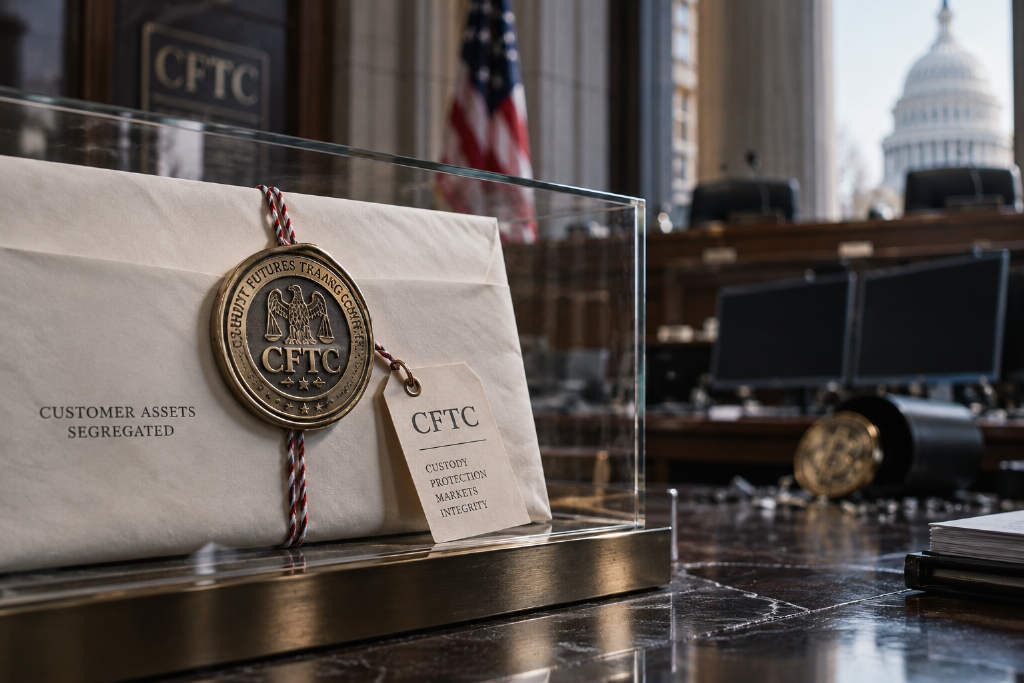
CFTC2026-10-08 02:55:06CFTC chair says customer fund protections will be brought to crypto spot marketsRostin Behnam, chair of the U.S. Commodity Futures Trading Commission, said the collapse of FTX showed what can happen when markets lack proper protections. In a post on X, he said the federally regulated crypto futures market has been able to hold together because customer funds are segregated and protected. Behnam added that the CFTC is now bringing the same safeguards to the crypto spot market. His remarks frame customer asset segregation as a core protection that regulators want to extend beyond futures trading. The comments point to a regulatory push focused on how client money is handled in spot crypto venues, using lessons drawn from the FTX failure.20
CFTC2026-10-06 14:00:56CFTC ANPRM seeks crypto spot market framework under existing authorityThe U.S. Commodity Futures Trading Commission has issued an advance notice of proposed rulemaking, or ANPRM, that seeks to use the agency’s existing authority to build a market structure framework for crypto spot trading, according to crypto reporter Eleanor Terrett. The proposal would sit on top of the current registration structure for designated contract markets, derivatives clearing organizations, and futures commission merchants, while adding a new category called “crypto asset markets.” One key difference from the Clarity Act, the report said, is that the CFTC is exploring a voluntary federal exchange registration path. Spot exchanges that do not offer leverage could choose to stay outside the framework and continue operating under state money transmitter licenses. Former CFTC Chair J. Christopher Giancarlo said the approach offers exchanges a “clear, voluntary, one federal rulebook path” when customers trade with borrowed funds. Lawyers cited in the report described the ANPRM as a “clever” or “creative” reading of Section 2(c)(2)(D) of the Commodity Exchange Act. They said it could reach retail crypto spot transactions involving leverage, margin, or financing, even if customers do not actually use leverage. The proposal also addresses “actual delivery” under that section and appears to focus on whether customers own or control the assets, rather than relying only on omnibus account book entries. Questions around bankruptcy protection for customer assets remain unresolved. Public comments will be due 60 days after the proposal is published in the Federal Register.20